ARTICLE
Your biggest deals are not dying because of your pitch. They are dying because buyers are afraid to decide.

Jonas Lind
Published



Most CEOs mistake activity for progress. In complex B2B, deals move only when buyers can answer three internal questions: What are we buying, has this worked somewhere like us, and can we defend the decision if it goes wrong?
A mid-sized industrial software company I worked with had spent months chasing a seven-figure deal with a multinational manufacturer.
On paper, everything looked promising.
The champion was engaged. Architecture had reviewed the solution. Security had joined the process. Procurement had started asking serious questions. Senior leaders had been in the room. The business case was strong enough that the seller was already forecasting the deal.
Then the deal stopped moving.
No one said the product was weak. No one said the price was wrong. No one said they had chosen a competitor.
Instead, the buyer asked for one more analysis. Then another stakeholder needed to be involved. Then the scope needed to be revisited. Then the next meeting slipped by two weeks. The champion went quieter. The seller kept adding effort, but the deal did not move.
From the outside, this looked irrational. The buyer had a real problem. The proposed solution worked. The economic case was clear.
But inside the buyer’s organization, the decision was not yet safe to make.
That is the part most sales teams, CEOs, and boards miss.
Big enterprise deals rarely die because of one bad meeting. They die because the buying organization never becomes ready to put its name on the decision.
Activity is not progress
Pipeline reviews reward visible motion.
More meetings. More stakeholders. More demos. More follow-up. More documents sent. More legal comments. More procurement questions.
In many sales environments, this is a reasonable way to judge progress. If one person has authority, the risk is contained, and the purchase can be reversed without major pain, activity often does correlate with momentum.
But complex B2B does not work that way.
In a high-stakes enterprise decision, activity can increase while actual commitment stays flat. The buying group can take meetings, request information, compare vendors, ask for pricing, and involve senior people without becoming any more ready to decide.
That is why so many large deals look alive right until they die.
The seller sees motion. The buyer is still stuck.
The mistake is assuming that decisions move forward one step at a time. In complex B2B, they often do not. They stay frozen until internal conditions change. Then they move quickly.
If you have ever seen a deal sit motionless for eight months and then close in two weeks, you have seen this pattern. The final sprint probably was not what made the deal happen. It was the moment the buyer could finally defend the choice.
Buyers do not always choose the best product
This is the uncomfortable truth.
In complex B2B, buyers do not always choose the best product. They choose the decision that is easiest to defend.
That does not mean buyers are irrational. It means the decision carries exposure.
A senior executive who signs off on a major software, technology, industrial, or services commitment knows what happens if it fails. They may have to explain the decision to the board, the regulator, the auditor, the CFO, the CEO, their own team, or their successor.
That changes the buying logic.
A buyer may believe your product is better and still choose Microsoft, SAP, IBM, Oracle, Salesforce, ServiceNow, Workday, or another familiar incumbent because the safer name is easier to defend internally.
If the known vendor fails, the decision looks understandable.
If the unknown vendor fails, someone owns the mistake.
This is why an inferior incumbent can beat a stronger challenger. It is why a technically excellent scale-up can lose to a slower, more expensive, more familiar alternative. And it is why sales teams often misread silence as indecision when it is really fear.
The buyer is not asking only, “Is this the best solution?”
They are asking, “Can I defend choosing this?”
The three questions that decide whether a buyer can move
After six years studying complex B2B sales motions across more than 100 organizations, I have seen the same pattern repeat.
Large deals become movable only when the buying group can answer three questions.
First: What exactly are we buying?
Second: Has this worked somewhere like us?
Third: Can we defend this decision if it goes wrong?
If any of these questions remains unresolved, the deal can produce a huge amount of activity without producing a decision.
These questions sound simple. They are not.
In a complex enterprise purchase, the buying group may include technology, security, finance, legal, procurement, compliance, operations, and senior leadership. Each function sees the decision through a different lens. Each function carries a different kind of risk. Each function can slow or stop the process without ever formally saying no.
That is why the old funnel is such a poor model for these deals.
The funnel says a deal moves from qualification to demo to proposal to negotiation to close.
The buyer does not experience it that way.
The buyer experiences the deal as an internal struggle to make the decision understandable, relevant, and defensible.
Question 1: What exactly are we buying?
A seller often assumes the buyer understands what category it belongs in.
That assumption is dangerous.
Imagine a software company selling into a large manufacturer. The IT architecture team sees the product as a platform component. Security sees it as an external system that needs review. Operations sees it as a workflow tool. Finance sees it as another line item. Procurement compares it against a vendor already in the approved supplier list.
Same seller. Same product. Five different interpretations.
From the seller’s side, this looks like progress. Many functions are engaged. Everyone is asking questions. The account feels active.
But the buyer is not evaluating one thing. It is evaluating several competing versions of the same thing.
That is a problem because organizations cannot make a shared decision about something they cannot describe in shared terms.
This is why category positioning matters so much in complex B2B.
Salesforce did not just sell software. It helped make “CRM” a board-level business category. ServiceNow did not simply sell IT tools. It became associated with enterprise workflow. Snowflake did not win only because cloud data warehousing was technically useful. It became easier to buy as more executives understood what category the decision belonged to.
A stable category gives the buyer’s organization a common language.
Without it, every function defaults to its own frame of reference. The seller then spends the process re-explaining itself to each stakeholder, one meeting at a time.
That is not momentum. That is category confusion.
Question 2: Has this worked somewhere like us?
Most B2B companies have case studies.
Many of those case studies are almost useless in complex deals.
They show logos, outcomes, quotes, and percentages. They may look impressive on a website. But risk-bearing buyers read proof through a narrower filter.
They want to know whether the proof transfers.
A bank wants to know whether the solution has worked in another bank. A regulated European insurer wants to know whether it has worked under comparable regulatory pressure. A manufacturer wants to know whether it has worked in an operating environment that looks like its own. A CISO wants to know whether another serious security team has already survived the review.
Generic proof does not answer those questions.
Relevant proof does.
This is why the first major deal in a market is so hard. The seller has to explain the category, prove the relevance, and help the buyer contain the perceived risk all at once.
The second deal is easier. The fifth is easier still.
Not because the product changed. Because the proof changed.
Once a supplier can point to a credible reference in the same market, the buyer no longer has to make the leap alone. Stakeholders can see their own environment in the example. The decision feels less experimental. The internal conversation shifts from “Why would we do this?” to “How did they do this?”
In high-complexity environments, references are not testimonials. They are decision insurance.
This is why companies such as Datadog, CrowdStrike, Snowflake, ServiceNow, and Workday became easier to buy as their reference base grew inside specific enterprise segments. Each successful deployment did more than create a logo. It reduced the perceived career risk for the next buyer.
A good reference does not just prove that something works.
It gives the next decision-maker cover.
Question 3: Can we defend this if it goes wrong?
This is the quietest question, and usually the most important one.
Every major enterprise deal has people who carry exposure. They may sit in security, legal, finance, compliance, operations, procurement, IT, or the executive team. They may not be the champion. They may not speak much in meetings. They may not even appear in the CRM notes.
But if the decision creates risk for their function, they have an effective veto.
These people are not necessarily against the deal. Often, they are simply not yet willing to be associated with the risk.
That reluctance rarely shows up as a direct objection.
It shows up as silence. A delayed meeting. A request for more analysis. A suggestion to involve another stakeholder. A budget review. A second legal opinion. A return to scope. A vague sense that “now may not be the right time.”
Sellers often respond by pushing harder.
They bring in the CTO. They offer another demo. They send more material. They arm the champion with more slides. They escalate. They discount. They try to create urgency.
Sometimes that helps. Often it does not.
Because the problem is not a lack of information. It is a lack of defensibility.
The person carrying exposure is asking a private question: “If this fails, will I look reckless?”
Until the answer is no, the deal will not move.
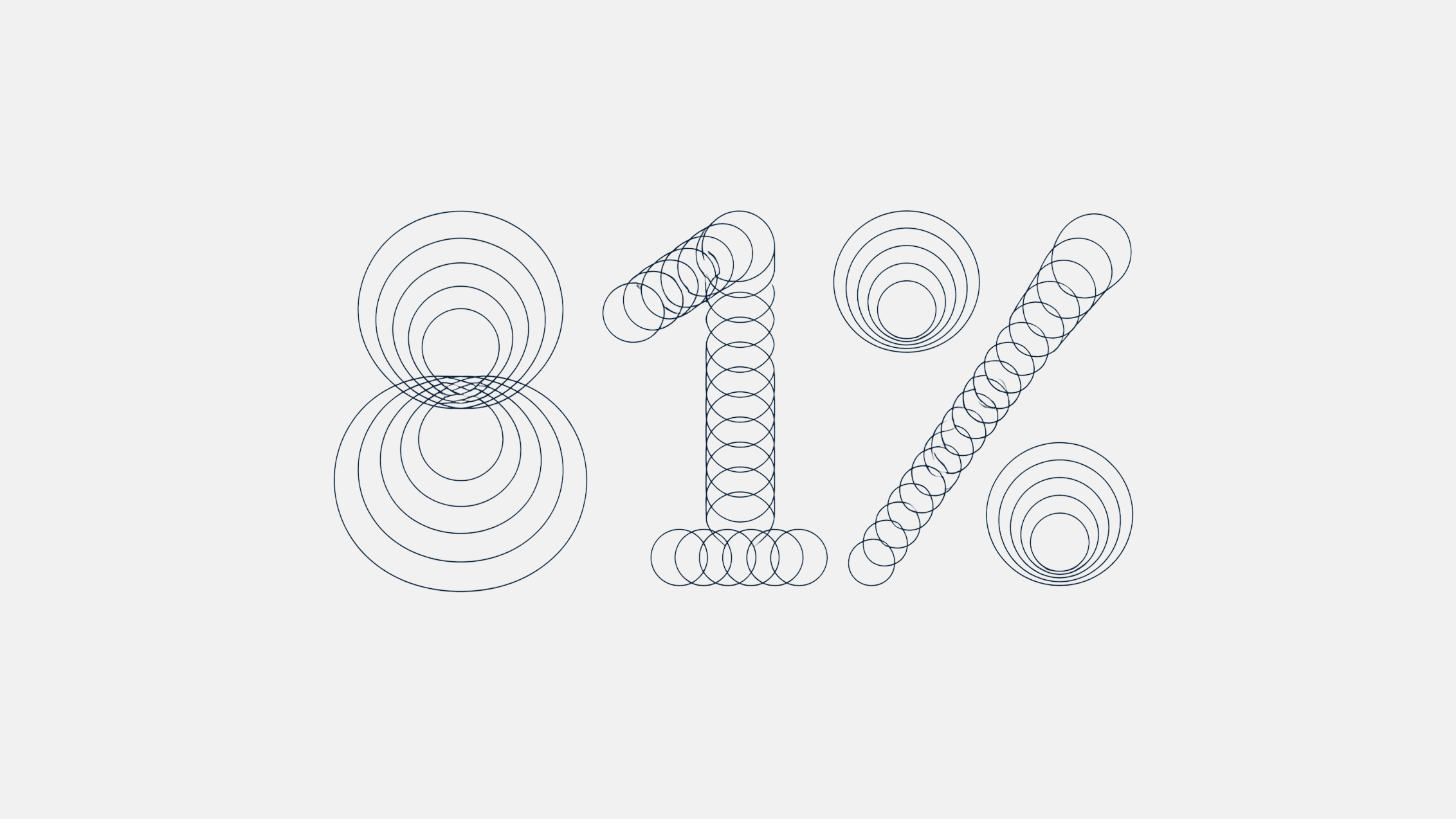
This explains why familiar vendors have such an advantage. Bain found in 2024 that 81% of buyers in complex B2B purchases favor a vendor already known to the buying group at the start of the process. That number should terrify any mid-sized company selling into enterprise accounts.
It means many deals are tilted before the first meeting.
The known vendor does not always have to prove it is best. It only has to be defensible.
The unknown vendor has to prove both.
Why strong vendors lose deals they should win
Once you understand these three questions, common deal failures become easier to read.
The deal with an excited champion that dies when security and finance get involved was probably never broadly safe. Enthusiasm was mistaken for readiness.
The deal with endless meetings and circular conversations probably lacked a shared category. Different stakeholders were evaluating different versions of the supplier.
The deal that loses to an inferior incumbent was probably not decided on product quality. It was decided on defensibility.
The deal that drags for months and then suddenly accelerates probably did not move because of the final email, final meeting, or final discount. It moved because the last internal constraint fell away.
This is what CEOs often miss in pipeline reviews.
They ask, “What is the next step?”
The better question is, “Which internal question has the buyer not answered yet?”
If the buyer cannot describe what you are, your deal is not ready.
If the buyer cannot see proof from a comparable environment, your deal is not ready.
If the people carrying risk cannot defend the decision, your deal is not ready.
Everything else is activity.
The mid-sized company trap
This problem is especially painful for mid-sized B2B companies.
These companies often sell high-value, high-complexity solutions into finite markets. Maybe there are 200 target accounts in a sector. Maybe 500 across a geography. Maybe the real revenue sits inside 50 global companies.
The opportunity is large, but the buying environment is brutal.
A 300-person software company selling into a global bank faces many of the same buying dynamics as Microsoft, SAP, or Salesforce. The buying group is fragmented. The risk is distributed. Security, legal, finance, compliance, procurement, IT, and leadership all need to become comfortable enough to let the decision move.
But the mid-sized company does not have enterprise-scale commercial infrastructure.
The largest vendors have teams, agencies, analysts, partner networks, brand recognition, executive relationships, customer references, stakeholder intelligence, account-based marketing, and years of accumulated trust around their most important accounts.
The mid-sized company often has two exceptional people and a CRM.
Usually, one of those people is the founder. The other is a senior commercial leader or technical expert who can open doors, build trust, and rescue stalled deals.
These people become the company’s rainmakers.
They are valuable. They are also a bottleneck.
Across more than 400 mid-sized companies we have studied or worked with in complex deal environments, the pattern was strikingly consistent: a small handful of people were responsible for nearly all the important deals.
That works for a while. Then it breaks.
New markets take too long to open because the company is not known. Deals stall because one champion cannot persuade ten functions. The rainmakers get spread across too many accounts. The CRM shows activity, but the market does not move.
The company is facing enterprise buying complexity with startup-level infrastructure.
Or, put more bluntly: it is trying to open three internal buyer questions with two people and a CRM.
What leaders should build instead
When large deals stall, the instinct is to blame sales.
More training. More pipeline. More outbound. A new methodology. A bigger sales team. A better deck. A more senior hire.
I understand the instinct. The sales team is closest to the visible problem.
But in complex B2B, the real constraint is often not the seller’s effort. It is the buyer’s internal readiness.
That means leaders need to build commercial infrastructure around the buyer’s decision, not just around the seller’s process.
First, they need positioning that makes the category clear.
The buyer should not need five meetings to understand what kind of decision this is. Every function may care about different details, but they need a shared understanding of what is being evaluated.
Second, they need references that match the market they are trying to win.
A logo is not enough. A buyer needs proof from a world it recognizes. The closer the reference is to the buyer’s own regulatory, operational, geographic, and organizational context, the more useful it becomes.
Third, they need senior-level confidence around risk.
Complex deals do not close only because a champion believes. They close when the people carrying exposure believe the decision can be defended. That often requires executive involvement, market credibility, trusted references, and clear ownership of the business case.
This is not traditional marketing. It is not traditional sales. It is the infrastructure that makes a complex decision easier to make.
The largest enterprise vendors have been building this for years. They surround strategic accounts with reputation, references, executive relationships, targeted content, stakeholder intelligence, and deal-specific support.
Mid-sized companies rarely have the same machinery.
But they need a version of it if they want to win the biggest deals in their market.
Stop asking whether the deal is active
The question leaders should ask in pipeline reviews is not, “Is the deal active?”
A stalled deal can be extremely active.
The better questions are:
Can the buying group describe what we are in the same way?
Can they see proof from an organization they consider comparable?
Can the people carrying risk defend choosing us if something goes wrong?
If the answer to any of those questions is no, the deal is not as advanced as it looks.
It may have meetings. It may have a champion. It may have procurement activity. It may even have legal redlines.
But it is not yet ready to move.
In complex B2B, decisions do not move because value is understood. They move because the buyer can make the decision without feeling exposed.
That is the real reason so many big deals die quietly. Not because the seller failed to pitch. Not because the product lacked value. Not because the buyer was unserious.
They die because no one inside the buying organization was ready to stand behind the decision.
The companies that understand this will stop mistaking activity for progress. They will build the category clarity, relevant proof, and executive confidence that make their biggest deals easier to defend.
Everyone else will keep pushing harder on deals that were never truly movable.
And they will keep wondering why the best product did not win.
—
Jonas Lind is the CEO of Njord. He is the author of the forthcoming book DECIDABLE, built on six years of action research across more than 100 organisations.
Jonas Lind

CEO, Njord
ARTICLE
Your biggest deals are not dying because of your pitch. They are dying because buyers are afraid to decide.
ARTICLE
Most enterprise deals are lost before the RFP. Bain says 81% of buyers already favor a vendor when the process starts.

ARTICLE
If your enterprise deals keep stalling at sign-off, you need a Red Fiat.