ARTICLE
Why hiring more salespeople will not save your stalled enterprise deals

Christopher Engman
Published



After studying 400 complex B2B companies, I found the same pattern again and again. The biggest deals depended on two or three people with the judgment, credibility, and history to move buying groups. Most CEOs only see the dependency when growth stalls. Hiring more salespeople rarely fixes it. It usually makes the problem more expensive.
The board thinks it is approving a hiring plan.
The CEO knows the truth is more uncomfortable.
Growth is behind plan. Two enterprise deals have been stuck for another quarter. A third has gone quiet after months of meetings. The pipeline review ends the same way it always does. Someone says the company needs more salespeople.
It sounds logical. More people means more coverage. More coverage means more pipeline. More pipeline means more revenue.
Except in complex B2B, that is often not what happens.
The company hires. The salary line grows. New enterprise sellers join. They open conversations, book meetings, and update the CRM. But when the important deals reach the hard part, the same two or three people get pulled back in.
The founder. The CEO. The star commercial leader. The technical visionary who can make a skeptical customer believe. The person who knows how to read the politics inside a buying group before anyone says the quiet part out loud.
The names change from company to company.
The pattern does not.
I call it Rainmaker Dependency, and after more than 20 years selling to and working with Fortune 500 companies on their largest deals, I believe it is one of the least understood constraints in complex B2B growth.
A few years ago, my team and I studied 400 companies operating at the highest end of B2B deal complexity. We looked account by account, deal by deal, and person by person.
The same pattern kept showing up.
A very small number of people were responsible for moving a very large share of the company’s most important opportunities.
Most CEOs do not see the dependency while things are working. They see revenue. They see pipeline. They see a commercial organization with 20, 50, or 200 people.
Then growth stalls, and the illusion breaks.
The secret is hiding in the calendar
The problem is rarely visible in a dashboard.
It is visible in the calendar.
Look at who gets pulled into the critical customer meeting. Look at who the customer calls when the process stalls. Look at who can get the CFO back to the table, calm down legal, reframe the business case, or reopen a conversation that everyone else thought was dead.
In many companies, the answer is the same two or three people.
That is the real sales capacity of the business.
Take a company selling into a finite market. It may have 70 target accounts. The deal sizes may run from 200,000 euros to several million. Sales cycles may last six to 18 months. Each account may involve 30, 80, or even 150 stakeholders across regions, business units, functions, budget owners, procurement, legal, IT, and finance.
Running one of those deals properly is not a side task.
It means knowing who matters before they enter the formal process. It means understanding what each stakeholder is afraid of. It means building familiarity long before a buying committee appears. It means sequencing conversations in the right order, keeping internal champions alive, spotting political risk, and holding the thread for a year or more.
One person can do that well for three or four accounts.
Maybe five, if they cut everything else.
So if a company has three Rainmakers and 40 accounts that matter, the math does not work. It has never worked.
And it is not a problem you can outwork.
Why hiring does not solve it
This is where many commercial leaders make the same mistake.
The board wants faster growth. The Rainmakers are already overloaded. The company has more strategic accounts than its best people can cover. So the answer seems obvious.
Hire more enterprise sellers.
The company pays senior salaries. It recruits people with impressive logos on their resumes. It builds a serious onboarding program. Everyone waits for the new hires to create leverage.
Six months later, the important deals are still flowing back to the same people.
The new hires may be competent. They may be experienced. They may even be excellent at standard enterprise sales.
But complex deals do not turn only on sales technique.
The Rainmaker has technique, of course. But that is not what makes them different.
What makes them different is judgment.
They know when a champion is overstating internal support. They know when procurement is negotiating or blocking. They know when a technical objection is really a political objection. They know when the buyer needs more information and when the buyer needs courage.
That kind of judgment is not taught in a two-week onboarding program.
It is built through hundreds of difficult conversations, failed deals, rescued deals, late-stage reversals, board-level escalations, and painful lessons that never make it into the CRM.
You can hire talented people.
You cannot instantly hire 15 years of pattern recognition.
That is why hiring often makes Rainmaker Dependency more expensive instead of solving it. The company adds headcount, but the scarce resource remains the same. The Rainmakers still carry the moments that decide the deal.
Only now, they are also expected to coach, rescue, review, and justify the performance of a larger team.
The Silicon Valley sales playbook makes this worse
A lot of companies are running a sales model that was built for a different kind of market.
The classic SaaS playbook gave companies SDR outbound, qualification calls, demo conversion rates, pipeline coverage, and volume-based sales management. It helped build huge businesses. In broad markets with thousands of potential customers, it can still work beautifully.
But in finite markets, it can be dangerous.
If your real revenue potential sits inside 50 to 200 accounts, every account matters. Every senior relationship matters. Every first impression matters.
Now apply a volume outbound model to that market.
A junior SDR sends a cold, generic email to a senior executive at one of your 80 most important accounts. Another sends a half-personalized LinkedIn message. A third asks for a 15-minute discovery call from someone who has never heard of your company.
In a long-tail market, that activity may simply be inefficient.
In a finite market, it is expensive in a different way.
You are not just wasting effort. You are teaching the exact people you need to trust you later that your company does not understand them.
The damage usually does not show up this quarter. That is what makes it so dangerous.
It shows up two years later as unanswered emails, stalled introductions, skeptical executives, and competitors who somehow seem to have warmer rooms than you do.
By the time the company notices, the CRM still looks clean. The relationship map does not.
The real problem is familiarity
Complex B2B deals are rarely decided by one person.
They are decided by groups. Increasingly large groups.
The technical buyer may understand the product. But the final decision often involves people who do not live in the product category every day. Legal. Finance. Procurement. HR. Security. Regional leaders. Transformation offices. Business-unit heads.
Many of these people are not trying to pick the most elegant product.
They are trying to avoid being blamed for the wrong decision.
That is why familiarity matters so much.
A known vendor enters the room with a kind of borrowed trust. An unknown vendor enters with homework to do.
This is especially brutal for challengers. The champion may love the product. The technical team may prefer it. The business case may be strong.
Then the deal reaches the wider committee.
Half the room has never heard of the company.
Suddenly the champion has two jobs. They have to argue for the solution, and they have to make the room comfortable with the vendor.
That second job is often harder than the first.
Most stalled deals do not die in a dramatic no. They die because the champion cannot carry the room.
The Rainmaker understands this before the formal process starts. They know the work is not just to win the buyer. It is to make the buyer’s internal argument easier.
That requires familiarity, credibility, timing, and trust across a much wider group than most sales teams are built to manage.
What Rainmakers actually do
The mistake many companies make is treating Rainmakers as better closers.
That is too narrow.
Rainmakers do not just close. They orchestrate.
They see the account as a system. They know which relationships matter now, which will matter in six months, and which invisible stakeholder can quietly kill the deal. They understand when to bring in the CEO, when to hold the CEO back, when to use a customer reference, when to reframe the business case, and when to stop selling altogether.
They do not simply ask, “Who is the decision maker?”
They ask:
Who shapes the decision before there is a decision?
Who will feel exposed if this fails?
Who needs to look smart for supporting it?
Who has to be reassured but will never join a sales call?
Who is quietly loyal to the incumbent?
Who can turn a maybe into momentum?
That is why Rainmakers are so hard to replace.
They are not just doing more sales activity. They are carrying a map of the customer’s internal reality.
Most organizations have no system for capturing that map. It lives in the Rainmaker’s head, scattered across calls, emails, notes, dinners, instincts, and history.
That is the dependency.
AI is about to expose the gap
For years, the largest enterprise vendors had a structural advantage in complex deals.
They could afford the machinery around major accounts. Account-based marketing teams. Industry experts. Customer intelligence. Deal desk support. Executive briefing teams. Agencies. Analysts. Content teams. Relationship mapping. Event programs. CRM operations. Twenty tools and dozens of people working around the same strategic accounts.
Smaller companies could not match that infrastructure.
So they leaned harder on their Rainmakers.
AI is starting to change the economics.
Not because AI can replace the Rainmaker. That is the wrong idea.
The opportunity is to scale the Rainmaker’s judgment.
AI can help map stakeholders across an account. It can summarize months of customer interaction. It can identify relationship gaps. It can track which stakeholders know the company and which do not. It can help tailor narratives for finance, legal, procurement, security, and business leaders. It can surface signals that a human team may miss. It can turn scattered account knowledge into something the broader organization can actually use.
That matters because the bottleneck in complex B2B is not usually effort.
It is coordinated intelligence.
The companies that understand this will make their best people more scalable. They will give the Rainmaker a system, not just a bigger calendar.
The companies that miss it will keep doing what they do now. They will hire more people, create more activity, and wonder why the same few individuals are still needed to save the quarter.
The CEO’s real choice
If you lead a complex B2B company, the uncomfortable truth is this:
Your growth may depend on two or three people.
It may have depended on them for years. You just felt it less when the company was smaller.
But as the company scales, the ceiling created by those people becomes the ceiling of the business.
Hiring does not remove that ceiling if the scarce resource is judgment.
Training does not remove it if the real bottleneck is customer-specific pattern recognition.
Volume outbound does not remove it if your market is finite and every relationship matters.
The answer is not to duplicate your Rainmakers. That is the dead end. You are unlikely to hire ten more people with the same credibility, instincts, history, and judgment.
The better question is how to build a company that does not trap all of that value inside their heads.
How do you capture what they know?
How do you help more people act on it?
How do you make every important account warmer, smarter, and better orchestrated before the formal buying process begins?
The companies that answer those questions will have a serious advantage in the next decade of complex B2B.
Not because they have more Rainmakers than everyone else.
Because they will have learned how to scale the ones they already have.
Christopher Engman

Founder, Njord
ARTICLE
Your biggest deals are not dying because of your pitch. They are dying because buyers are afraid to decide.
ARTICLE
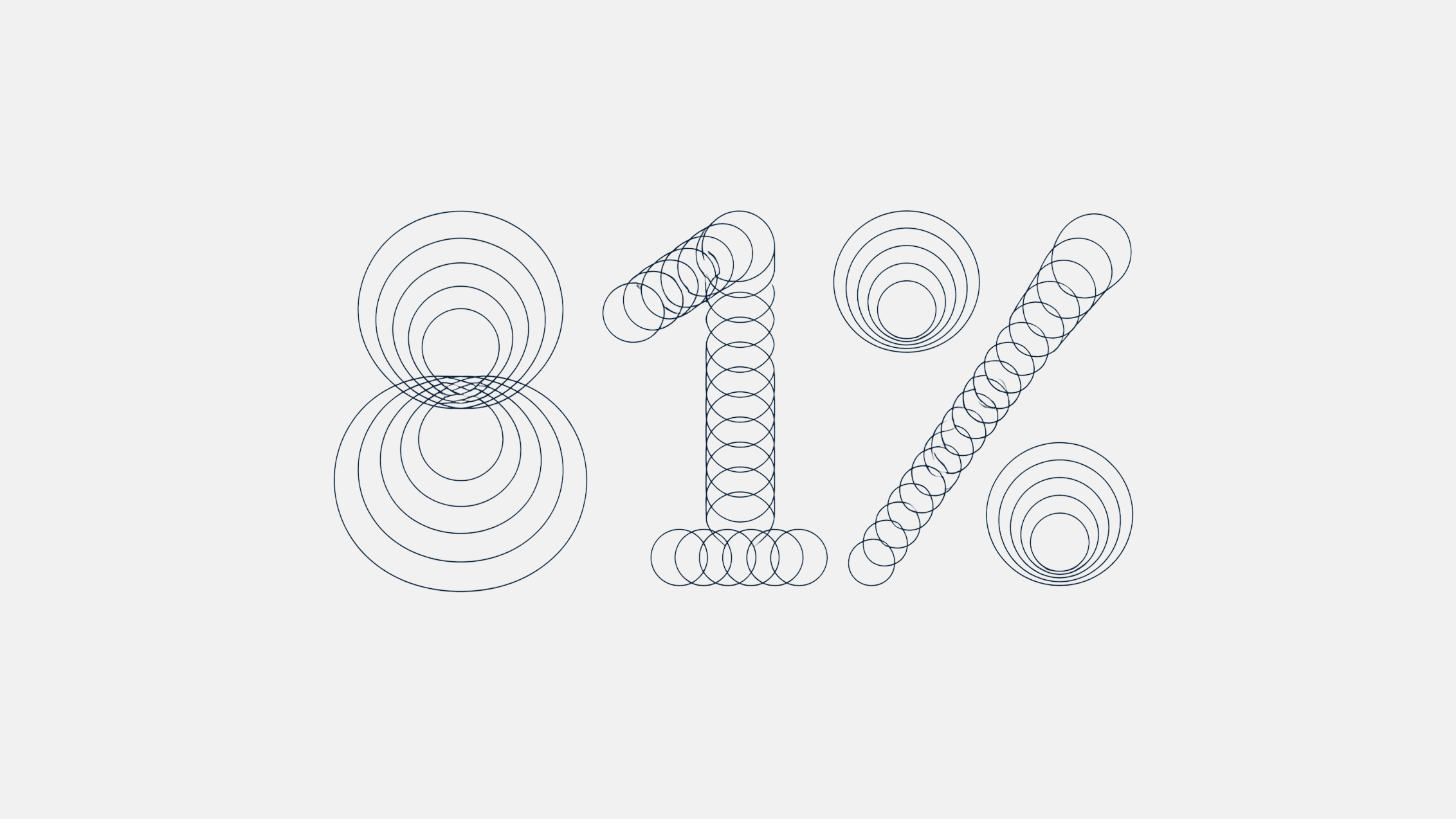
Most enterprise deals are lost before the RFP. Bain says 81% of buyers already favor a vendor when the process starts.

ARTICLE
If your enterprise deals keep stalling at sign-off, you need a Red Fiat.